Dex compliance 2026 limits to account for
Building a compliant DEX in 2026 requires choosing between full integration, hybrid models, or strict geoblocking. The SEC and MiCA frameworks no longer treat "code is law" as a shield. Teams must balance user privacy against the cost of identity verification and transaction monitoring.
The following table compares three common compliance architectures. Each model shifts the burden of enforcement from the protocol layer to the application or user interface layer.
| Model | User Verification | Operational Cost | Privacy Tradeoff |
|---|---|---|---|
| Full KYC/AML | Mandatory ID + Wallet Screening | High (Third-party APIs, legal overhead) | Low (Centralized data storage) |
| Hybrid (Tiered) | Optional for low volume; Mandatory for high | Medium (Selective onboarding) | Medium (Data minimization) |
| Geoblocking Only | None (IP/Device fingerprinting) | Low (Automated filtering) | High (No PII collected) |
Full KYC/AML Integration
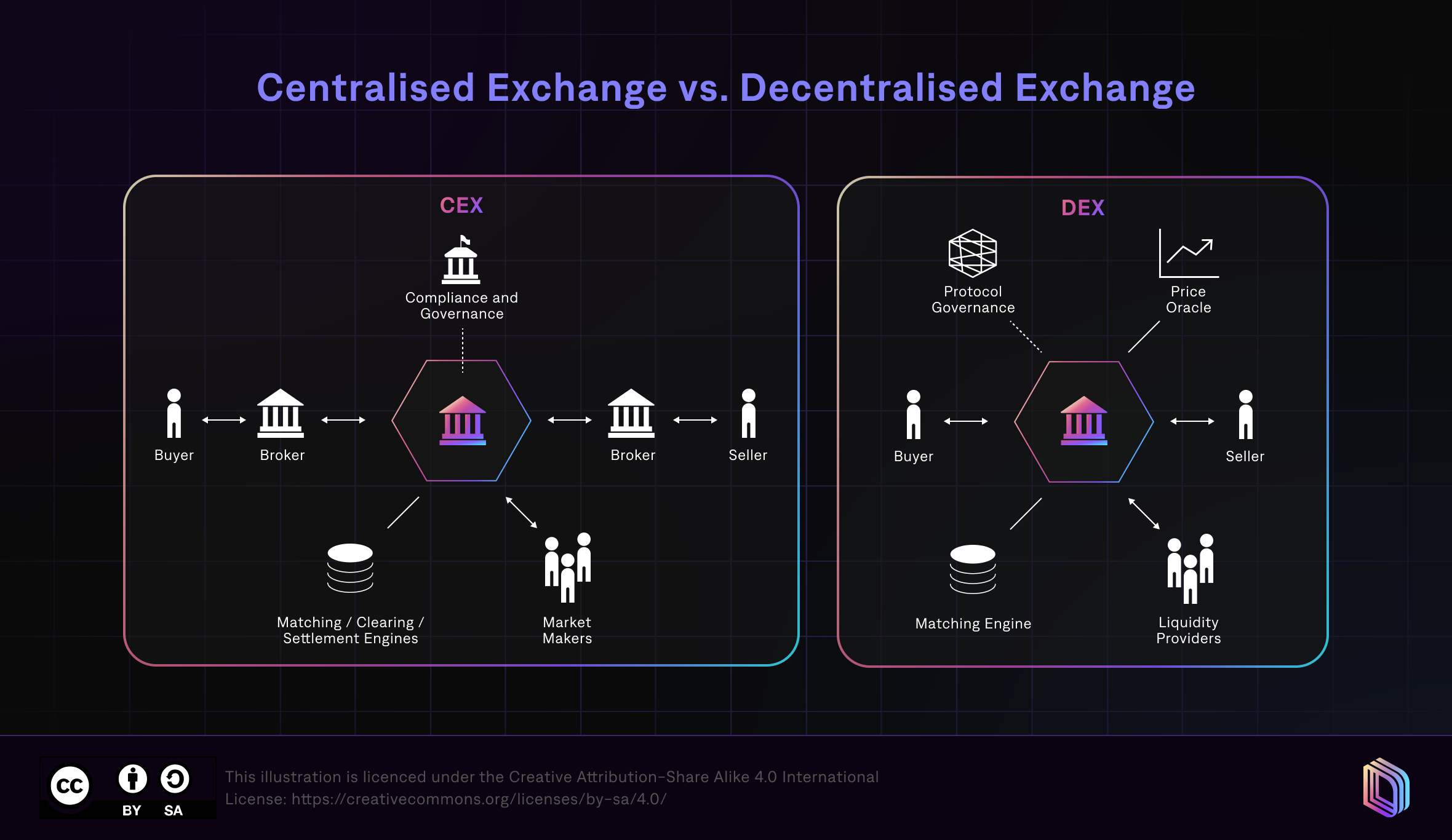
This model mirrors centralized exchange (CEX) standards. Users must submit government ID and undergo wallet screening before trading. It satisfies the strictest interpretations of the Travel Rule and MiCA’s VASP requirements. However, it increases customer acquisition friction and creates a high-value target for data breaches. Legal teams must manage ongoing regulatory audits and report suspicious activity directly to authorities.
Hybrid Tiered Approach
Hybrid models allow anonymous trading up to a certain fiat or token threshold. Above that limit, users must verify their identity. This balances accessibility with regulatory safety. It requires sophisticated backend logic to track cumulative transaction volumes across sessions. While it reduces the total number of verified users, it still exposes the platform to AML risks if threshold limits are exploited through structuring.
Geoblocking and IP Filtering
This approach restricts access based on jurisdiction rather than user identity. It is the least invasive but offers the weakest defense against enforcement actions. Regulators increasingly argue that accessible interfaces constitute "offering services" in their jurisdiction. If a user in the US or EU accesses the DEX via a VPN, the protocol may still be liable for facilitating unlicensed securities trading or sanctions violations.
Choosing the Right Model
Your decision depends on your target market and risk appetite. If you aim for institutional liquidity or operate in the EU, full KYC or a robust hybrid model is likely mandatory. For retail-focused, privacy-centric platforms, geoblocking is a starting point, but it is not a complete legal shield. Always consult legal counsel to interpret local securities laws, as enforcement trends favor protocols that demonstrate active compliance efforts.
Choose the next step
DEX Compliance works best as a clear sequence: define the constraint, compare the realistic options, test the tradeoff, and choose the path with the fewest hidden costs. That order keeps the advice usable instead of decorative.

Watch for misleading compliance claims
The 2026 regulatory landscape for decentralized exchanges is defined by enforcement actions rather than safe harbors. DEX teams are now accountable for AML, KYC, transaction monitoring, and jurisdictional compliance (LinkedIn, 2026). Platforms that ignore these requirements face immediate SEC scrutiny.
Many projects market "fully decentralized" status to avoid regulation. This is a false equivalence. If a protocol controls liquidity pools, governance tokens, or user funds, the SEC views it as an unregistered securities exchange. Claiming decentralization does not shield you from enforcement.
Another common mistake is assuming MiCA compliance is optional for global operations. Even if your team is offshore, serving EU users triggers MiCA obligations. Ignoring these updates creates a compliance gap that regulators will exploit.
Focus on concrete controls: implement robust transaction monitoring and real-time sanctions screening. These are not optional features; they are the baseline for operating legally in 2026.
Dex compliance 2026: what to check next
The regulatory landscape for decentralized exchanges has shifted from theoretical debate to active enforcement. In 2026, the assumption that code alone provides legal immunity no longer holds. Platforms face direct liability if they fail to implement basic compliance infrastructure, regardless of their decentralized architecture.
Do DEXs still need KYC and AML checks?
Yes. Regulators in the US and EU now expect DEX operators to implement Know Your Customer (KYC) and Anti-Money Laundering (AML) protocols. While full identity checks may not be required for every small trade, sanctioned wallet screening and transaction monitoring are mandatory. Failure to filter transactions linked to illicit activity can result in severe penalties under the Travel Rule and local AML laws.
Is the SEC enforcing rules against DEXs?
The SEC has moved beyond guidance to active enforcement. Regulators are targeting DEX founders and developers who provide centralized control over liquidity pools or order books. If a platform facilitates trading for US persons without proper registration or exemptions, it faces significant legal risk. The focus is on the economic reality of the platform, not just its technical structure.
How does MiCA affect DEX operations in Europe?
The Markets in Crypto-Assets (MiCA) regulation creates a unified framework for digital assets across the EU. DEXs operating in Europe must comply with strict transparency and security standards. This includes clear disclosure of smart contract risks and adherence to anti-money laundering directives. Non-compliant platforms may be barred from serving EU residents.
What compliance tools are essential in 2026?
Essential tools include blockchain analytics for transaction monitoring, sanctions screening, and jurisdictional compliance checks. These technologies allow DEXs to detect and block illicit flows while maintaining user privacy where legally permitted. Implementing these tools is no longer optional but a core requirement for legal operation.
Helpful gear
Use these product recommendations as a starting point, then choose the size, material, and price point that fit how you actually use the gear.

As an Amazon Associate, we may earn from qualifying purchases.
No comments yet. Be the first to share your thoughts!