
Determine your regulatory jurisdiction
The term "decentralized" describes the technology, not the legal status. In 2026, operating a decentralized exchange without determining your regulatory jurisdiction is a critical error. Regulators have shifted from debating whether DEXs fit existing definitions to actively enforcing them based on operator nexus and user location.
Your compliance strategy depends entirely on where you operate and where your users reside. The regulatory landscape is no longer a single global standard but a fragmented set of strict regional frameworks. Ignoring these boundaries exposes the protocol and its operators to severe penalties.
European Union: MiCA Framework
The European Union has established the most comprehensive regulatory baseline for digital assets through the Markets in Crypto-Assets (MiCA) regulation. This framework treats DEXs as Virtual Asset Service Providers (VASPs) if they facilitate the exchange of crypto-assets for fiat or other digital assets.
Under MiCA, compliance requires robust anti-money laundering (AML) procedures, transparent governance, and strict capital requirements. The regulation applies to any entity offering services to EU residents, regardless of where the operator is physically located. Failure to register or adhere to MiCA standards can result in substantial fines and operational bans.
United States: SEC and FATF Alignment
In the United States, the regulatory environment remains complex but increasingly focused on enforcement. The Securities and Exchange Commission (SEC) continues to scrutinize decentralized protocols that may be deemed to involve unregistered securities offerings. The Financial Action Task Force (FATF) guidelines further pressure US-based operators to implement rigorous Know Your Customer (KYC) and transaction monitoring protocols.
Recent shifts indicate that the SEC is prioritizing cybersecurity and market integrity alongside crypto enforcement. However, the burden of proof often falls on the operator to demonstrate that their protocol is truly decentralized and does not constitute a security. Operators must navigate this uncertainty by aligning with FATF Travel Rule standards to mitigate regulatory risk.
Global Implications
For DEX operators, determining jurisdiction is not a one-time task but an ongoing process. As new frameworks emerge in Asia, the Middle East, and Latin America, the definition of "regulated" continues to expand. Building a compliance-first architecture from the start is the only way to ensure long-term viability in a fragmented global market.
Integrate Travel Rule infrastructure
The FATF Travel Rule requires Virtual Asset Service Providers (VASPs) to exchange originator and beneficiary information for cross-border transfers above specific thresholds. For DEXs, this creates a compliance friction point: if your platform facilitates transfers that trigger VASP classification, you must embed identity verification into your withdrawal flow. Ignoring this turns a technical feature into a regulatory liability.
Implementing this infrastructure requires selecting a provider and wiring their API to your transaction lifecycle. Follow these steps to integrate Travel Rule compliance without breaking user experience.
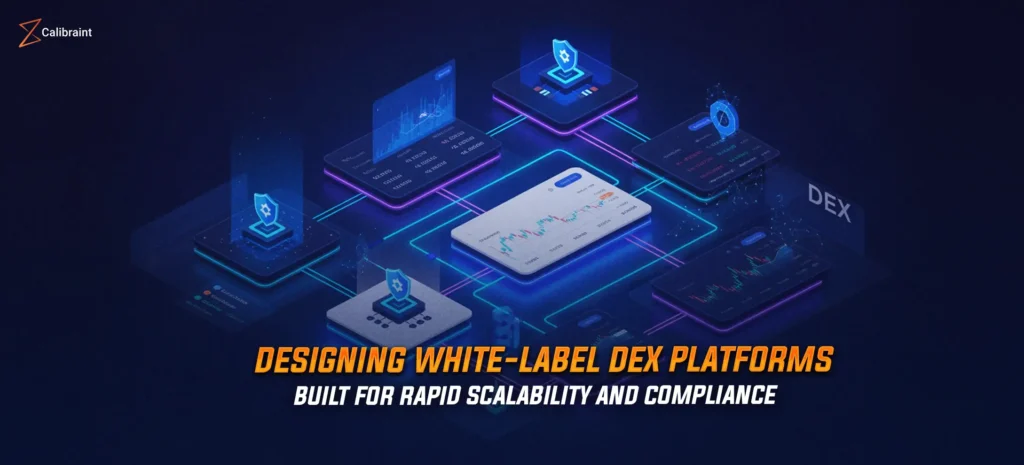
Choose a vendor that supports the SWIFT MT103 or IVMS 101 data standards. Providers like Notabene, Sygna, or TRISA act as the intermediary network, allowing your DEX to verify counterparties without building a proprietary global identity graph. Ensure they support the specific blockchains you operate on.
Determine the transaction value that activates the Travel Rule. Most jurisdictions require data exchange for transfers over $1,000 USD. Configure your backend to flag these specific transactions. Below this threshold, you may only need to log the hash for audit trails, but above it, you must pause the transaction until verification is complete.
Integrate the provider’s API into your withdrawal UI. When a user initiates a large transfer, your system should redirect them to the provider’s verification portal. This is where the originator’s identity is confirmed. Do not rely on the user to manually input this data; automate the handshake between your DEX and the recipient’s VASP.
Before releasing funds, check if the receiving wallet belongs to a registered VASP. If it does, use the Travel Rule network to securely exchange the required beneficiary data. If the recipient is a non-custodial wallet, you may need to apply a different compliance strategy, such as enhanced due diligence or blocking the transfer, depending on local MiCA and SEC interpretations.
Maintain an immutable record of every Travel Rule interaction. This includes the IVMS 101 data sent and received, timestamps, and the verification status. This log is your primary defense during regulatory audits. Ensure your data retention policy aligns with FATF recommendations, typically keeping records for at least five years.


As an Amazon Associate, we may earn from qualifying purchases.
This integration is not optional for DEXs aiming for institutional liquidity. As noted by Chainalysis, the industry compliance baseline has tightened significantly, with nearly half of organizations now operating at alerting standards that would have been considered advanced just a few years ago. Building this infrastructure now prevents costly retroactive fixes later.
Implement geofencing and sanctions screening
To comply with MiCA and SEC expectations, you must prevent users in prohibited jurisdictions from accessing your DEX. This requires a two-layer defense: blocking access at the network level and screening wallets against official sanctions lists.
Block IP addresses from restricted regions
The first step is to restrict access based on the user's geographic location. Integrate a geolocation API that maps IP addresses to countries in real time. When a user connects, check their IP against a blocklist of sanctioned countries and regions under EU or US sanctions.
Configure your frontend or gateway to return a clear error message if the user is in a restricted zone. Do not allow them to connect their wallet or view trading pairs. This prevents accidental or intentional access from prohibited areas.
Screen wallets against OFAC and EU lists
IP blocking is not enough. Users can bypass geofencing using proxies or VPNs. You must also screen wallet addresses against the Office of Foreign Assets Control (OFAC) SDN list and the EU’s consolidated sanctions list.
Integrate a blockchain analytics provider that flags addresses associated with sanctioned entities. If a user’s wallet appears on these lists, block all transactions and flag the account for review. This step is critical for avoiding regulatory penalties and maintaining platform integrity.
Compare IP blocking vs. on-chain screening
| Feature | IP Blocking | On-Chain Wallet Screening |
|---|---|---|
| Primary Target | Geographic location | Wallet address identity |
| Bypass Risk | High (via VPN/Proxy) | Low (if analytics are robust) |
| Regulatory Focus | Jurisdictional access control | Sanctions compliance (OFAC/EU) |
| Implementation | GeoIP API integration | Blockchain analytics API |
Use both methods together. IP blocking handles the initial access control, while wallet screening ensures that even if a user bypasses the first layer, their funds are not interacting with sanctioned entities. This dual approach is the standard for compliant DEX operations in 2026.
Structure KYC/AML for non-custodial models
Non-custodial DEXs operate in a gray zone: you do not hold user funds, yet regulators increasingly treat the interface as a service point requiring oversight. MiCA and SEC enforcement signals suggest that anonymity at the gateway is no longer a defensible position. To remain compliant, you must decouple identity verification from asset custody.
The most practical approach is to implement a "KYC-gated gateway." This architecture requires users to pass identity checks before they can access the trading interface or mint a compliant access token. The smart contract then enforces these rules programmatically, ensuring that only verified identities can interact with the protocol.
1. Implement an Off-Chain Identity Layer
Do not store sensitive personal data on-chain. Instead, use a decentralized identity (DID) solution or a zero-knowledge proof (ZKP) provider. This allows users to prove they are over 18, not on a sanctions list, and verified without revealing their full identity to the public ledger.
2. Gate the Interface
Integrate the verification step into your frontend. Users should not be able to connect their wallet and trade until the gateway confirms their compliance status. This creates a clear audit trail for regulators, showing that you actively prevent illicit access.
3. Upgrade Smart Contracts for Enforcement
Your smart contracts must recognize the verification status. Use ERC-20 or ERC-721 tokens as "compliance keys." Only wallets holding a valid, non-expired key can execute trades. This ensures that even if a user bypasses the frontend, the backend protocol blocks the transaction.
4. Maintain a Compliance Checklist
Before launching, ensure your infrastructure meets these baseline requirements:
-
Identity provider integrated with GDPR/MiCA data retention policies
-
Smart contract updated to enforce access control based on KYC status
-
Frontend gateway blocks unverified wallet connections
-
Audit trail logs stored securely for regulatory review
This structure shifts the burden of compliance from the user to the protocol design, aligning non-custodial models with emerging regulatory expectations.
SEC enforcement and tax reporting
The regulatory landscape for decentralized exchanges is shifting. In a notable change for 2026, the SEC has removed crypto from its primary exam priorities, pivoting focus toward cybersecurity, market integrity, and retail protection. This shift does not mean deregulation; it means the enforcement lens has narrowed. The agency is prioritizing systemic risks over individual token classifications, but the underlying threat of securities enforcement remains for projects that fail to meet specific legal thresholds.
Distinguishing securities from utility tokens
Compliance still hinges on the Howey Test. If a token offers an expectation of profit derived from the efforts of others, it is likely a security. DEXs must ensure their governance tokens are structured as pure utilities—granting voting rights and protocol access—without marketing narratives that promise financial returns. This distinction is the primary defense against SEC action. Projects that treat governance as a revenue-sharing mechanism risk immediate classification as securities.
IRS 1099-DA reporting delays
The IRS has delayed the implementation of the 1099-DA digital asset reporting requirement. This pause provides a temporary window for DEX operators to adjust their systems without immediate penalty. However, the requirement is not canceled. Users and platforms must still report transactions accurately under existing tax laws. If you are waiting for the delayed 1099-DA forms, you can file IRS Form 4868 to receive an automatic six-month extension until October 15, 2026. This ensures you have time to finalize your records once the forms are issued.
Actionable compliance steps
- Audit tokenomics: Ensure governance tokens have no profit-sharing mechanisms.
- Monitor SEC guidance: Watch for updates on cybersecurity and market integrity exams.
- Prepare for 1099-DA: Build internal tracking systems even if the IRS form is delayed.
- Consult legal counsel: Verify your structure against current Howey Test interpretations.
No comments yet. Be the first to share your thoughts!