
SEC removes crypto from 2026 exam priorities
In a notable shift for the digital asset sector, the Securities and Exchange Commission (SEC) has removed cryptocurrency from its list of primary examination priorities for 2026. Instead, the agency is directing its supervisory resources toward cybersecurity, market integrity, and retail investor protection. This realignment signals a move away from broad, industry-wide scrutiny of digital asset platforms as a primary enforcement target during routine examinations.
This change does not imply a lack of regulatory oversight. Rather, it distinguishes between routine exam priorities and active enforcement actions. The SEC continues to pursue legal action against entities it deems to be operating as unregistered securities exchanges or offering unregistered securities. The removal from exam priorities suggests that the agency is prioritizing systemic risks and traditional market structures over the decentralized finance (DeFi) sector in its day-to-day supervisory activities.
For decentralized exchanges (DEXs) and their users, this distinction is critical. While the immediate pressure from routine SEC examinations has eased, the legal gray area regarding no-KYC platforms remains narrow. Direct enforcement against purely on-chain smart contracts has historically been limited, but the regulatory landscape is still evolving. Market participants should monitor official SEC filings and guidance documents for any updates that might signal a return to heightened scrutiny of DeFi protocols.
The broader market context remains sensitive to these regulatory signals. Traders and developers are watching closely to see if this shift in exam priorities translates into a more stable operating environment for decentralized protocols or if enforcement actions will continue to target specific bad actors within the ecosystem.
Global rules tighten with Travel Rule and DAC8
Cross-border DEX operations now face a dual-pressure environment. While the US SEC has shifted its 2026 exam priorities toward cybersecurity and market integrity, international frameworks are hardening their grip on decentralized finance infrastructure. For operators serving a global user base, compliance is no longer optional; it is a technical and legal prerequisite for survival.
The FATF Travel Rule mandates that Virtual Asset Service Providers (VASPs) share originator and beneficiary information for transactions exceeding specific thresholds. This requirement forces DEX front-ends and aggregators to implement transaction monitoring and sanctioned wallet filtering, effectively neutralizing the anonymity that early crypto adopters relied upon. Failure to integrate these checks risks immediate de-platforming from traditional banking rails.
Simultaneously, the EU’s DAC8 directive introduces mandatory automatic exchange of information for crypto-asset service providers. Starting January 1, 2026, Reporting Crypto-Asset Service Providers (RCASPs) must report user holdings and transaction data to tax authorities. This creates a unified reporting standard across member states, closing the jurisdictional arbitrage that previously allowed non-compliant entities to operate with impunity.
The divergence between US enforcement focus and EU reporting mandates creates a complex compliance landscape. Operators must navigate distinct regulatory expectations while maintaining a unified technical stack.
| Region | Primary Framework | Operational Focus | Enforcement Style |
|---|---|---|---|
| United States | SEC / FinCEN | Cybersecurity & Market Integrity | Case-by-case litigation |
| European Union | DAC8 / MiCA | Tax Reporting & Transparency | Automated data exchange |
| Global | FATF Travel Rule | AML/CTF Data Sharing | Interoperability mandates |
This table outlines the distinct regulatory pressures shaping DEX compliance in 2026. The US approach remains adversarial and precedent-driven, while the EU moves toward systematic, automated data collection. Global standards via the FATF act as the baseline for cross-border interoperability.
- Penetration testing
- Vulnerability assessment
- Compliance certification
As an Amazon Associate, we may earn from qualifying purchases.
KYC integration and permissioned DEX models
The friction between anonymity and regulatory compliance is driving a structural shift in decentralized exchange design. Rather than abandoning the decentralized model, developers are integrating identity verification layers and creating permissioned access tiers. This approach allows exchanges to satisfy anti-money laundering (AML) requirements while preserving the core benefits of on-chain settlement.
Layered KYC verification
Instead of requiring full identity checks for every transaction, modern DEXs are adopting a tiered KYC framework. Users can trade with minimal friction up to a certain limit, while higher-volume or suspicious activity triggers deeper verification. This balances user privacy with the need for regulatory transparency.
Permissioned pools and whitelisting
Permissioned DEX models introduce controlled access to specific liquidity pools. By whitelisting approved participants, exchanges can offer compliant trading environments for institutional investors who are otherwise barred from public DeFi protocols. This creates a hybrid environment where regulated entities can operate without exposing themselves to unvetted counterparties.
Technical implementation on XRPL and Ethereum
The XRP Ledger has pioneered this approach with its permissioned DEX features, allowing regulated institutions to trade value without compromising compliance. Similarly, Ethereum-based protocols are experimenting with zero-knowledge proofs to verify KYC status without exposing raw personal data on-chain. These technical solutions aim to satisfy the SEC’s focus on market integrity while maintaining the speed and efficiency of decentralized trading.
Compliance toolkits and audit requirements
Building a defensible compliance program for decentralized exchanges requires more than theoretical adherence to regulations; it demands practical, integrated technical controls. As firms move beyond policy drafting in 2026, the focus has shifted to operationalizing compliance through software that can handle the unique architecture of DEXs. This involves layering transaction monitoring and identity verification protocols directly into the smart contract or interface level to create an audit trail that regulators can actually inspect.
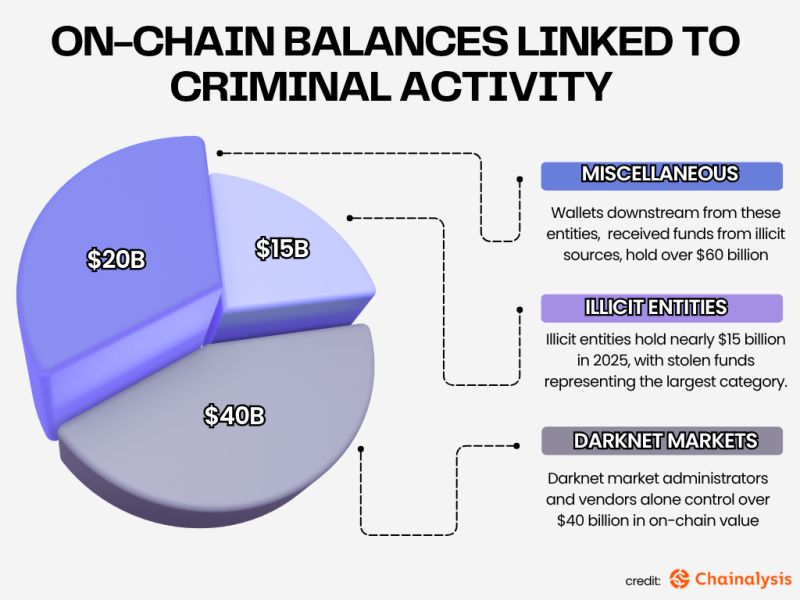
Transaction monitoring systems serve as the primary defense against illicit activity. These tools analyze on-chain data in real-time to flag suspicious patterns, such as rapid mixing or interactions with sanctioned addresses. By integrating these monitors, exchanges can enforce the Travel Rule thresholds, ensuring that significant transactions are screened for anti-money laundering (AML) and counter-terrorism financing (CTF) compliance before they are finalized. This proactive monitoring is essential for demonstrating due diligence during regulatory examinations.
Geofencing and identity verification form the second pillar of this toolkit. While DEXs operate globally, local regulations often require strict adherence to jurisdictional boundaries. Geofencing tools restrict access from prohibited regions, while identity verification modules ensure that users meet Know Your Customer (KYC) standards where required. Together, these tools create a layered compliance framework that balances decentralization with regulatory obligation, allowing exchanges to operate legally across diverse markets.
Common Questions on DEX Regulations
The regulatory landscape for decentralized exchanges shifts rapidly. Understanding current SEC priorities and global standards like the Travel Rule is essential for navigating 2026 compliance.
No comments yet. Be the first to share your thoughts!