
The 2026 regulatory shift for DEXs
The era of regulatory ambiguity for decentralized exchanges is ending. In 2026, the landscape has shifted from theoretical oversight to explicit compliance obligations under both U.S. Securities and Exchange Commission (SEC) enforcement and the European Union’s Markets in Crypto-Assets (MiCA) framework.
For years, DEX operators relied on the argument that code, not a central entity, was responsible for transactions. That defense no longer holds. Regulators now focus on the individuals and entities that control the underlying protocols, require active participation in governance, or facilitate fiat on-ramps. The legal distinction between a "pure" decentralized protocol and a centralized exchange is narrowing, forcing DEX teams to adopt traditional compliance infrastructure.
Under the EU’s MiCA implementation, DEXs operating within or targeting European markets must register as crypto-asset service providers (CASPs). This requires implementing Know Your Customer (KYC) checks, Anti-Money Laundering (AML) monitoring, and transaction screening against sanctioned wallets. These are no longer optional best practices; they are legal prerequisites for operation.
In the United States, the SEC has intensified enforcement actions against DEXs that list unregistered securities. Recent guidance clarifies that offering liquidity pools involving security tokens triggers federal securities laws, regardless of the platform's decentralized architecture. DEX operators must now conduct rigorous token classification audits and restrict access to prohibited jurisdictions to mitigate liability.
The result is a convergence of DEX and centralized exchange (CEX) compliance standards. While the technology remains decentralized, the operational reality demands centralized oversight mechanisms. DEXs that fail to integrate these compliance layers face increasing risk of delisting, legal action, or loss of liquidity.
SEC decentralized exchange rules explained
The 2026 regulatory landscape for decentralized exchanges (DEXs) has shifted from theoretical scrutiny to enforced operational accountability. The Securities and Exchange Commission (SEC) now holds DEX teams responsible for a specific set of compliance tasks, including anti-money laundering (AML) protocols, know-your-customer (KYC) verification, transaction monitoring, and sanctioned wallet filtering [src-serp-2]. This marks a departure from the "code is speech" defense, establishing that those who build and maintain the routing infrastructure cannot remain entirely blind to how that infrastructure is used.
To qualify for safe harbor under new frameworks, providers must satisfy 11 cumulative conditions, such as demonstrating objective and verifiable transaction routing and maintaining no custody of user assets [src-serp-8]. However, the push for integration means that even non-custodial platforms are expected to implement screening tools that block transactions involving high-risk addresses. Users who previously relied on complete anonymity now face the reality that their on-chain activity will be filtered against regulatory watchlists before a trade is executed.
While DEXs are not currently required to abide by KYC or AML regulations in the same way centralized exchanges do, the pressure is mounting [src-serp-5]. The SEC's stance is clear: if a protocol offers features that facilitate trading at scale, it must incorporate compliance mechanisms. This creates a hybrid model where the user experience remains self-custodial, but the underlying code enforces regulatory boundaries.
EU MiCA requirements for DEX operators
The Markets in Crypto-Assets (MiCA) regulation establishes a unified framework for crypto-assets across the European Union, fundamentally altering the compliance landscape for decentralized exchanges. For DEX operators, the transition from a self-described "non-custodial" model to a regulated entity under MiCA demands concrete operational shifts, particularly regarding geofencing and the Travel Rule.
MiCA classifies certain DEX activities as Virtual Asset Service Provider (VASP) services, triggering mandatory registration and adherence to anti-money laundering (AML) standards. This classification forces operators to implement strict geofencing protocols to ensure that only users within compliant jurisdictions can access specific features, effectively creating a digital border control layer on the blockchain.
The following table compares the divergent compliance expectations between the US Securities and Exchange Commission (SEC) and the EU's MiCA framework, highlighting how regulatory approaches differ in their enforcement of identity verification and cross-border transaction monitoring.
| Compliance Requirement | US SEC Expectations | EU MiCA Requirements |
|---|---|---|
| KYC / Identity Verification | Mandatory for centralized intermediaries; ambiguous for pure DEXs | Required for VASP-registered DEX operators providing on-ramps |
| AML / Transaction Monitoring | Subject to Bank Secrecy Act; FinCEN guidance evolving | Full AML/CFT compliance required for all registered VASPs |
| Geofencing | Not explicitly mandated but enforced via sanctions lists | Explicitly required to restrict access to non-compliant jurisdictions |
| Travel Rule | Proposed for crypto but not fully implemented | Mandatory for transfers above €1,000 |
Geofencing is no longer optional. DEXs must detect user location via IP and device fingerprinting to block access from prohibited regions before any transaction occurs. Simultaneously, the Travel Rule mandates that DEXs collect and transmit sender and beneficiary information for transactions exceeding €1,000, mirroring traditional banking requirements.
Operational compliance kits for 2026
By 2026, the "code is law" defense no longer shields DEX operators from enforcement. The SEC and EU regulators now expect technical integration of compliance tools directly into the protocol stack. This shift requires moving from passive smart contracts to active, monitored systems that can identify and block illicit activity in real time.
The primary operational change is the adoption of wallet screening APIs. Protocols now integrate services like Chainalysis or TRM Labs to check every incoming transaction against sanctioned address lists. If a wallet is flagged, the smart contract can automatically reject the swap or freeze the interaction, preventing the DEX from processing illicit funds.
Transaction monitoring systems form the second pillar of this compliance kit. Unlike centralized exchanges, DEXs must monitor on-chain behavior patterns rather than login credentials. Automated analytics track clustering and mixing services, flagging transactions that resemble money laundering techniques. This data is then reported to regulatory bodies as required by the Travel Rule and EU’s MiCA framework.
Legal teams are also embedding compliance checks into governance proposals. Before upgrading a protocol, operators must verify that the new code does not bypass existing AML filters. This creates a feedback loop where technical updates are legally vetted, ensuring the DEX remains compliant as regulations evolve.
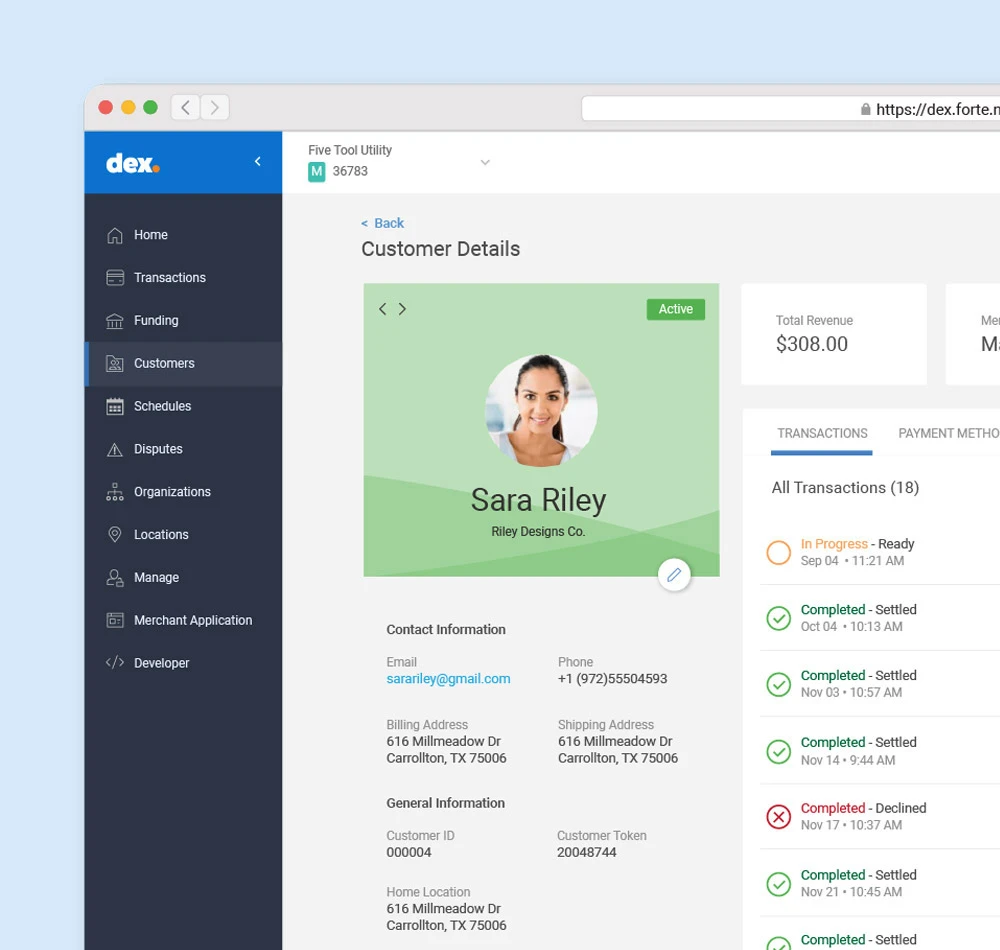
Compliance tradeoffs: DEX versus CEX
The structural difference between centralized and decentralized exchanges dictates where the compliance burden lands. Centralized exchanges (CEXs) act as custodians, meaning they hold user funds and must implement rigorous KYC and AML protocols to satisfy regulators. This creates a clear liability chain for the operator but requires users to surrender identity data. In contrast, DEXs operate through smart contracts, allowing users to trade directly from their wallets without handing over custody. This architecture removes the central point of failure for user data but complicates regulatory enforcement.
Under current 2026 frameworks, the distinction determines who bears the legal risk. CEXs face direct regulatory scrutiny and must maintain detailed transaction records to prevent illicit flows. DEXs, by design, do not currently collect KYC information, shifting the privacy advantage to the user but leaving the protocol operators in a legal gray area. As regulators tighten rules on on-ramps and off-ramps, the compliance gap between these models is becoming the primary differentiator for institutional adoption.
Frequently asked: what to check next
Is a DEX safe for crypto trading?
DEXs operate through smart contracts, meaning users retain custody of their private keys. This non-custodial model eliminates the risk of a central exchange hacking a pooled treasury, a common failure point for centralized platforms. However, smart contract vulnerabilities and impermanent loss in liquidity pools remain significant technical risks. Users must conduct their own security audits of the protocols they interact with.
Which is better, a DEX or a CEX?
The choice depends on the user's priority between control and convenience. Centralized exchanges (CEXs) offer fiat on-ramps, customer support, and a simpler interface, making them practical for beginners and institutional compliance. DEXs provide greater privacy, lower fees, and access to unlisted tokens, but require technical proficiency. For 2026 compliance, many hybrid models are emerging to bridge this gap.
Do DEXs require KYC?
Most DEXs do not currently require Know Your Customer (KYC) checks because users trade directly with one another via smart contracts rather than through a central intermediary. This contrasts with CEXs, which are heavily regulated and mandate identity verification. However, upcoming EU and US frameworks may introduce "Travel Rule" compliance for specific high-volume DEX interfaces, potentially altering this landscape by 2026.
What are the top 5 DEXs in 2026?
Market leadership in the DEX space is dominated by platforms like Uniswap, Curve Finance, and PancakeSwap, which handle the majority of decentralized trading volume. Other notable platforms include Jupiter for Solana-based assets and dYdX for perpetual futures. These platforms are selected based on total value locked (TVL), liquidity depth, and transaction volume.
Helpful gear
Use these product recommendations as a starting point, then choose the size, material, and price point that fit how you actually use the gear.


As an Amazon Associate, we may earn from qualifying purchases.
No comments yet. Be the first to share your thoughts!