
The 2026 regulatory shift for decentralized exchanges
The U.S. Securities and Exchange Commission’s Division of Examinations published its fiscal 2026 priorities without the dedicated crypto-assets section that appeared in recent years. This structural omission signals a notable change, reflecting Washington’s broader adoption of a friendlier stance toward digital assets. However, treating this absence as a deregulation milestone is a dangerous oversimplification for decentralized exchange (DEX) operators.
While the explicit focus on crypto-specific litigation may have softened, the underlying enforcement mechanisms governing Anti-Money Laundering (AML) and sanctions compliance remain strictly in force. DEX teams are now held accountable for transaction monitoring, sanctioned wallet filtering, and jurisdictional compliance. The assumption that a DEX is automatically exempt from licensing and compliance obligations is no longer just risky; it is legally untenable.
The compliance landscape has shifted from broad regulatory targeting to precise, on-chain enforcement. Operators must now navigate a complex environment where technical anonymity does not shield them from legal liability. Understanding this distinction is critical for any entity operating in the DeFi space in 2026.
Core Pillars of the 2026 DEX Compliance Kit
The 2026 regulatory landscape no longer permits DEXs to operate as unregulated wildlands. With the SEC’s Division of Examinations refocusing its fiscal priorities and global frameworks like MiCA and the GENIUS Act solidifying in the US and Europe, the technical architecture of decentralized exchanges must now embed compliance at the protocol level. This is not merely about avoiding fines; it is about ensuring the survival of the platform in a high-stakes legal environment.
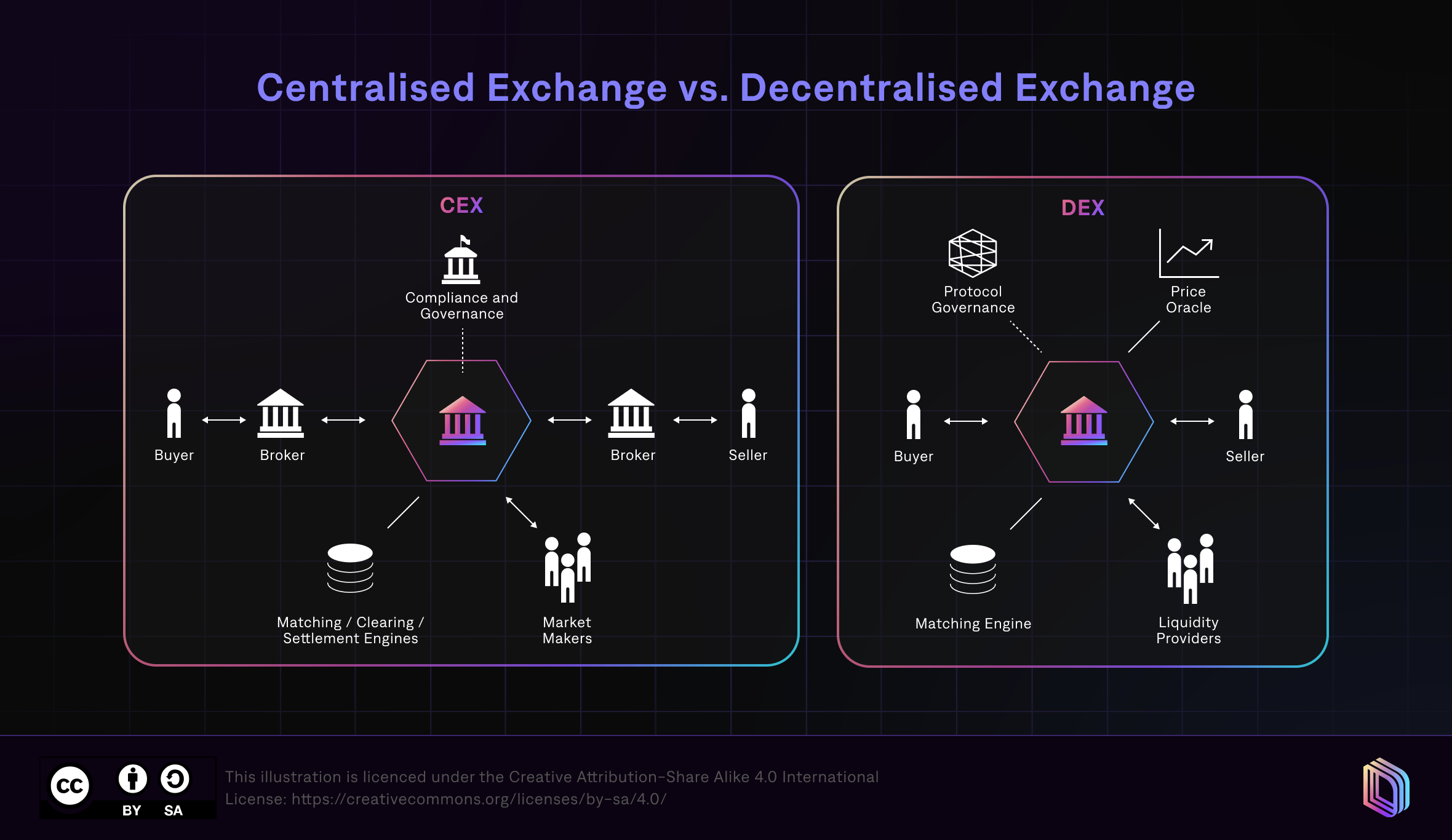
The modern DEX compliance kit consists of four non-negotiable technical and operational pillars: identity verification (KYC), anti-money laundering (AML) monitoring, sanctions screening, and Travel Rule adherence. These requirements transform the DEX from a passive liquidity layer into a regulated Virtual Asset Service Provider (VASP) or its functional equivalent. The shift moves the burden of proof from the user to the protocol, requiring on-chain audit capabilities that can trace, flag, and restrict transactions in real-time.
Identity Verification (KYC) and Sanctions Screening
KYC in 2026 has evolved from simple email collection to a multi-layered identity protocol. For DEXs, this often manifests as "permissioned liquidity" or "compliance-ready" architecture where certain pools or high-value transactions require verified identity tokens (Verifiable Credentials). Simultaneously, sanctions screening is automated through blockchain analytics tools that check addresses against OFAC and EU consolidated lists before a swap is executed. This prevents the exchange from inadvertently facilitating transactions with sanctioned entities, a critical requirement under the new SEC and global AML standards.
AML Monitoring and Transaction Analysis
Anti-Money Laundering (AML) compliance requires continuous, real-time transaction monitoring. DEXs must deploy on-chain analytics to detect suspicious patterns such as layering, smurfing, or interactions with mixers like Tornado Cash. The 2026 framework demands that DEXs maintain audit trails that can be produced to regulators upon request. This involves tagging addresses, monitoring wallet clustering, and implementing risk-based thresholds that trigger enhanced due diligence for high-risk transactions.
Travel Rule Adherence
The Travel Rule, originally designed for fiat transfers, now applies to crypto asset transfers above specific thresholds (e.g., $1,000 in the US, €1,000 in the EU). DEXs must integrate with Travel Rule solution providers to share originator and beneficiary information (VASP-to-VASP data) for qualifying transactions. This is technically challenging for decentralized protocols but essential for interoperability with traditional finance. Failure to implement this creates a regulatory gap that can lead to severe penalties or operational shutdowns.
On-Chain Audit Requirements
Finally, the 2026 kit mandates robust on-chain audit capabilities. This means the protocol's smart contracts must be audited by reputable firms, and the results must be publicly accessible. Also, the DEX must maintain an immutable record of compliance actions taken (e.g., address freezes, transaction blocks) on-chain. This transparency serves as proof of compliance to regulators and builds trust with institutional participants who require verifiable adherence to legal standards.
| Compliance Pillar | Legacy CEX Approach | 2026 DEX Implementation |
|---|---|---|
| KYC | Centralized database of user profiles | On-chain identity tokens or permissioned pools |
| AML | Internal transaction monitoring systems | Real-time on-chain analytics integration |
| Sanctions | Manual and automated list screening | Automated address tagging and blocking |
| Travel Rule | Direct VASP-to-VASP data sharing | Integration with Travel Rule solution providers |
| Audits | Annual internal and external audits | Continuous smart contract verification and public audit trails |
On-chain audit tools for regulatory verification
On-chain audit tools function as the technical backbone for proving compliance, allowing decentralized exchanges to demonstrate transparency and adherence to legal frameworks through verifiable data. These platforms translate raw blockchain transactions into structured reports that satisfy regulatory scrutiny, effectively bridging the gap between anonymous code and institutional accountability.
Unlike traditional off-chain audits that rely on periodic snapshots, on-chain solutions provide continuous monitoring of liquidity pools, smart contract interactions, and user activity. This real-time visibility is essential for detecting suspicious patterns, such as money laundering attempts or insider trading, before they escalate into regulatory violations. By integrating these tools directly into the trading infrastructure, DEXs can maintain defensible compliance records that stand up to SEC examinations.
The shift toward automated verification reflects a broader industry movement from reactive reporting to proactive governance. Firms are no longer relying solely on manual reviews; instead, they are deploying AI-driven analytics and heuristic models to flag anomalies instantly. This approach not only reduces the burden on compliance teams but also ensures that every transaction is recorded in a manner consistent with anti-money laundering (AML) and know-your-customer (KYC) requirements.

As the regulatory landscape evolves, the ability to instantly generate audit trails for any given block or transaction has become a competitive advantage. DEXs that prioritize robust on-chain verification are better positioned to attract institutional capital, which demands rigorous transparency. This technological foundation transforms compliance from a cost center into a trust signal, reinforcing the integrity of the decentralized financial ecosystem.
Structuring Defensible Governance
The regulatory landscape for decentralized exchanges has shifted from enforcement-by-announcement to structured oversight. While the SEC’s fiscal 2026 priorities no longer feature a dedicated crypto-assets section, this does not signal a retreat. Instead, it reflects a transition toward applying existing securities and financial regulations to digital asset infrastructure through targeted examinations. DEXs must now prove that their governance structures provide sufficient accountability to satisfy these inquiries.
Legal defensibility begins with entity separation. Operating as a purely anonymous protocol is no longer a viable shield against liability. Founders should establish distinct legal entities for front-end interfaces, governance token management, and core protocol development. This separation isolates operational risk and clarifies which entity holds responsibility for specific compliance functions, such as AML monitoring or sanctions filtering. Clear organizational charts and documented decision-making processes are essential evidence during regulatory audits.
Governance token holders must also understand their liability exposure. Active participation in protocol upgrades or treasury management can be interpreted as exercising control, potentially reclassifying passive investors as active operators subject to stricter regulatory burdens. Smart contracts should be designed to minimize centralized points of failure while maintaining transparent audit trails for all significant governance actions. This approach aligns with the industry’s shift from "code is law" to "code is accountable," ensuring that automated rules do not override legal obligations.
Compliance readiness requires more than just technical fixes; it demands a holistic framework. Teams must implement robust transaction monitoring, sanctioned wallet filtering, and jurisdictional compliance checks. These measures are not optional add-ons but foundational elements of a defensible legal strategy. By integrating these practices into the core governance model, DEXs can plan around the complex regulatory environment of 2026 with greater confidence and resilience.
-
Establish distinct legal entities for frontend, governance, and protocol layers.
-
Document all governance decision-making processes and audit trails.
-
Implement automated transaction monitoring and sanctioned wallet filtering.
-
Review governance token holder liability exposure in legal opinions.
-
Ensure smart contracts maintain transparent audit capabilities for regulators.
Helpful gear
Use these product recommendations as a starting point, then choose the size, material, and price point that fit how you actually use the gear.


As an Amazon Associate, we may earn from qualifying purchases.
No comments yet. Be the first to share your thoughts!